
How Much Does Acupuncture Cost in Santa Monica?
What affects the cost of acupuncture in Santa Monica: visit length, follow-ups, herbs and add-ons, how to think about insurance, and current prices.
By Dr. Plamena Gradinarova, DAcCHM
If you have ever seen a row of round marks on someone’s back at the pool or in a photo, you have seen the aftermath of cupping. The photos can look dramatic. This guide explains what is actually going on, so a first appointment feels familiar before you walk in.
Cupping Therapy is a 30 minute visit on the booking page at AcupuncturePG in Santa Monica. If you already know you would like to try it, you can book online here. If you would like to talk it over first, a free 15-minute consultation is offered on Tuesdays from 2 to 3 pm, booked by email or text message.
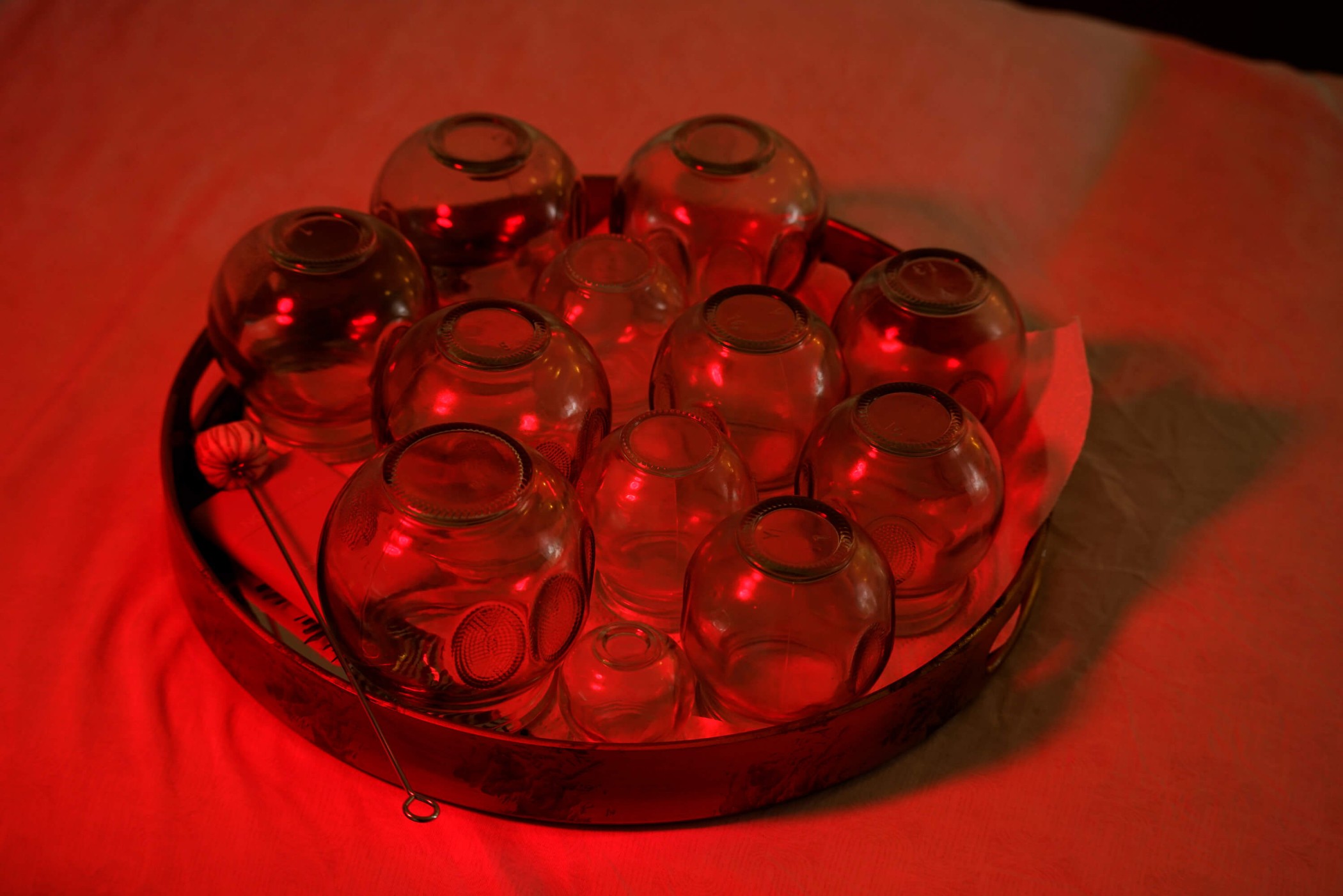
Cupping is a traditional technique in which cups are placed on the skin and held there by suction. The Cleveland Clinic describes it as an ancient healing technique, in which the suction inside the cup pulls the skin upward.
Cupping is also part of traditional Chinese medicine. In that framework, it is described as a way of working with the flow of qi, the vital energy that Chinese medicine says moves through the body. That is a traditional way of understanding the body. It is a different language from the one used in a hospital, and you do not need to share the worldview to have a session.
Dr. Gradinarova uses both plastic and glass cups, depending on the patient. If your skin is more sensitive, she uses plastic cups. The cups can be placed on zones of the back, and on the legs for tight muscles. Cupping can be combined with acupuncture, depending on the patient and the condition.
It is natural to wonder whether it hurts. The Cleveland Clinic says cupping shouldn’t cause pain, though you may feel some skin tightness while the cups are on.
Everyone’s body responds differently. If anything feels uncomfortable, say so right away. Your practitioner can adjust the cup or take it off.
Dr. Gradinarova confirms that a session generally follows this order:
A short conversation. Your practitioner will ask what brought you in, what you have tried, and whether there is anything about your health they should know before starting. She also asks whether you have a significant event in the next 7 days, because the marks will show.
Placing the cups. Cups are placed on an area such as the back, and sometimes the arms, legs or stomach, according to the Cleveland Clinic. It describes providers typically using three to five cups, and sometimes up to seven. How many cups and where they go is up to your practitioner.
Resting with the cups on. Cups usually stay in place for several minutes, per the Cleveland Clinic.
Taking the cups off, and a few words about aftercare. You will leave with an idea of what to expect over the next few days.
If you have never had a treatment like this, tell your practitioner at the start. A first-timer’s session can go at whatever pace feels comfortable.
This is the part that can surprise people. Cupping can leave round marks where the cups were.
Dr. Gradinarova says marks can stay for up to 7 days, and that some soreness afterward is a normal reaction. The Cleveland Clinic describes red, round marks that should fade in a week or two, and adds that although the marks look like bruises, they are not true bruises that injure muscle fibers. The skin can also feel slightly sore afterward.
Because the marks are visible, it is worth thinking about what you are wearing in the days afterward. A top with a low back or a swimsuit will show them. If you have a significant event in the next 7 days, tell your practitioner before your session.
The Cleveland Clinic lists a few things to call your provider about afterward: burns, extreme pain or soreness, and fever or other signs of skin infection such as redness, tenderness or yellow discharge. If you notice any of those, contact your practitioner or a doctor.
Dr. Gradinarova’s own instructions:
A few common-sense comfort tips also help: wear loose, soft clothing, be gentle with the skin, and take it easy for the evening.
Cupping is not right for everyone, and the person best placed to say is your practitioner, after hearing about your health. Dr. Gradinarova does not do cupping on anyone with an infection or an open wound. Tell your practitioner before your session if any of the following apply:
The Cleveland Clinic lists most of these among the situations in which to avoid cupping, and says to talk to your healthcare provider before trying cupping or any other alternative medical treatment. If there is anything else going on with your health, mention it too, even if it is not on this list.
For questions about your own health, a consultation is the place to ask. This post cannot tell you whether cupping suits your situation.
Dr. Gradinarova includes cupping in a visit when it is needed. If you would like cupping as a service on its own, it is booked and charged separately (30 minutes, $75, see How Much Does Acupuncture Cost in Santa Monica?). Cupping can be combined with acupuncture, depending on the patient and the condition. Other services include SCENAR therapy, cosmetic acupuncture, Chinese herbal medicine, moxibustion and ear seed treatments.
If you are unsure which visit to book, what to expect at a first acupuncture visit describes how a first appointment works. If you are comparing it with another technique, dry needling vs acupuncture explains how the two differ.
Dr. Plamena Gradinarova, DAcCHM, brings more than 22 years of experience in kinesiology and holds both a Master’s and a Doctorate degree from SCUHS. She deepened her knowledge in Chinese acupuncture and herbology, and her journey as a healer began in 2005. You can read more on the about page. The practice serves Santa Monica, Brentwood, Venice, Marina del Rey, Pacific Palisades and West LA. Hours are Tuesday, Friday and Saturday, 11 am to 6 pm.
If you would like to try cupping, or just talk it over first, the next step is a booking or a conversation. The contact page has the ways to reach the practice, and the booking page shows current availability. The free 15-minute consultation is on Tuesdays, 2 to 3 pm. Email office@acupuncturepg.com or send a text message to (510) 761-2720.
AcupuncturePG, 729 Montana Ave, Suite 6, Floor 2, Santa Monica, CA 90403. Phone (510) 761-2720.
—
Cupping is a traditional technique in which cups are placed on the skin and held in place by suction, which pulls the skin upward. It is part of traditional Chinese medicine, where it is described in terms of the flow of qi. A session is led by a practitioner, who can explain each step as it happens.
The booking page lists Cupping Therapy at 30 minutes. Your practitioner will tell you what to expect for your own visit.
The Cleveland Clinic says cupping shouldn’t cause pain, though you may feel some skin tightness while the cups are on. Everyone responds differently, so say so right away if anything feels uncomfortable. Your practitioner can adjust a cup or remove it.
Dr. Gradinarova says marks can stay for up to 7 days. The Cleveland Clinic describes red, round marks that should fade in a week or two, and says they are not true bruises that injure muscle fibers. Contact your practitioner or a doctor about burns, extreme pain, fever, or signs of skin infection such as redness, tenderness or yellow discharge.
Dr. Gradinarova does not advise swimming or showering right away. Preferably shower the next day, or at least a couple of hours after the treatment.
Mention infection or an open wound, pregnancy, blood thinners or any bleeding or clotting concern, skin conditions such as eczema or psoriasis, a heart condition or pacemaker, seizures, and anemia. Mention anything else about your health too. Your practitioner decides with you whether cupping suits your situation. For personal health questions, book a consultation.
What affects the cost of acupuncture in Santa Monica: visit length, follow-ups, herbs and add-ons, how to think about insurance, and current prices.
Is dry needling the same as acupuncture? Here is how the two differ in framework and approach, plus what to ask any provider in Santa Monica.